Why Payment Experience Management Will Determine Which Credit Unions Win the Next Generation
We’ve all seen it happen: A member logs in to make a loan payment, but forgets their credentials. After a few frustrating minutes, they finally get in, only to realize their preferred payment method isn’t an option. What should have been a quick, self-service task turns into a call to support. Multiply that by hundreds of thousands of members across credit unions, and it’s easy to see how small pain points add up to a big problem.
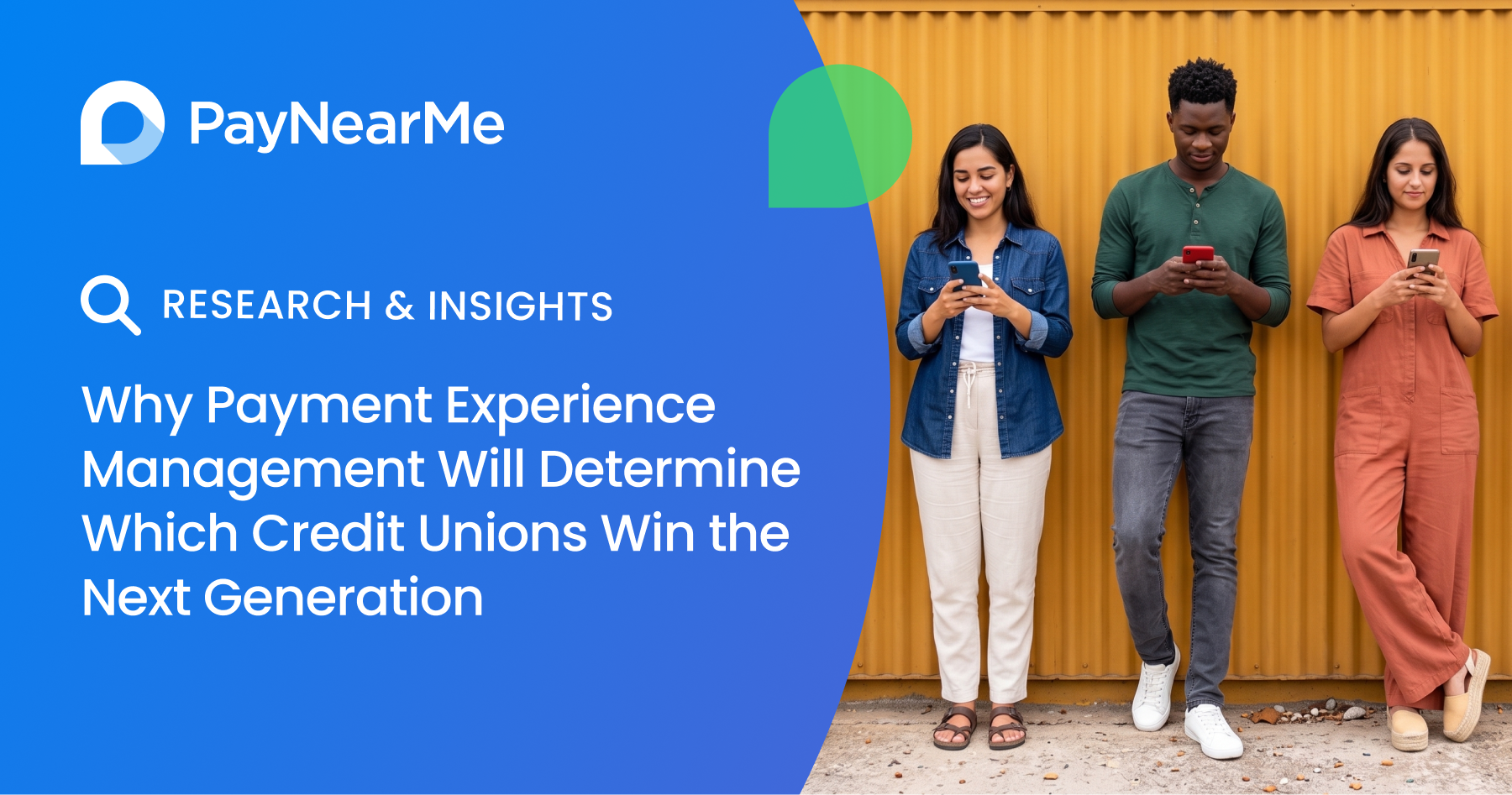
This friction is quietly pushing the next generation—Gen Z—away. Today, they make up just 4% of credit union membership, and nearly 1/3 don’t even realize they can join one. That’s not just a missed opportunity; it’s a flashing warning light. As boomers retire and borrow less, our movement’s future depends on connecting with younger members who expect seamless, mobile-first experiences.
Meanwhile, competitors aren’t standing still. Two-thirds (66%) of community banks now view integrated loan processing as a key opportunity. Neobanks already enjoy a staggering 79% comfort level among consumers. If credit unions don’t modernize their payment experiences, those frictionless alternatives will continue pulling the next generation farther away.
Too often, financial institutions treat these as isolated issues—a forgotten password here, an unsupported payment method there. They’re actually symptoms of a much larger challenge: the payment experience. That’s why leading organizations are embracing Payment Experience Management, an approach to removing friction across the payment journey so it’s easier for members to pay and easier for businesses to get paid.
The path forward is clear: to win Gen Z’s trust and loyalty, we must match their expectations and meet them where they are—on their phones, in their wallets and in control.
Here are three areas where your competitors are prioritizing:
1. Improve the member experience by offering payment choice and flexibility
Payment Experience Management begins with the member experience because that’s where members decide whether paying feels easy—or frustrating. They won’t compare your payment experience to another credit union. They’ll compare it to every effortless digital experience they have elsewhere.
Gen Z, the demographic that will define credit unions’ future, is telling us exactly what they want. Sixty-one percent are open to making loan payments through digital wallets. Half prefer PayPal, nearly as many lean toward Apple Pay, and more than ⅓ choose Venmo. Almost half also want to use the money already sitting in those wallets to pay their loans. These numbers speak volumes about how this generation thinks about convenience and control.
As baby boomers—who make up nearly 40% of credit union members—borrow less and retire, credit union growth depends on engaging Gen Z now. If you don’t offer the payment flexibility they expect, you risk sending them straight into the arms of competitors who do. Failing to offer mobile-first payment options such as PayPal, Venmo and Apple Pay could alienate this tech-savvy generation and threaten credit unions’ long-term viability.
2. Creating effortless payment experiences
When a member hits a wall trying to make a simple online payment, it’s not just a frustration—it’s an unnecessary cost. What should be a 10-cent transaction suddenly becomes an $8 support call. For Gen Z, these friction points aren’t minor annoyances; they’re signals that their digital-first expectations aren’t being met.
The data tells the story clearly. Nearly half of Gen Z struggles to keep track of due dates, a third find lender websites hard to navigate, another third run into issues entering payment details, and over ⅓ say the lack of preferred payment methods is a real problem. Every one of those barriers chips away at trust and convenience—two things this generation values above all else.
It doesn’t have to be this way. When credit unions align with Gen Z’s digital expectations, the results can be transformative. Imagine payment reminders delivered right where members already spend their time—via text or push notification—with a direct link that takes them straight into payment flow. No logins. No hassle. Just a few taps and done. More than half (51%) of Gen Z says that kind of simple reminder would help them pay on time.
And let’s not overlook their habits. This generation has grown up sending money instantly through PayPal, Apple Pay and Venmo—it’s how they move money every day. Offering those same options for loan payments isn’t just convenient; it’s essential for showing that credit unions understand and can keep pace with their world.
Finally, personalization ties it all together. Nearly seven in 10 (67%) Gen Z members say pre-filled payment details make a difference. By eliminating extra steps, you can show them you value their time. The outcome? Lower call volumes, fewer missed payments and happier members who see their credit union as a true digital partner.
3. Delivering personalized experiences at scale
Payment innovation isn’t just about adding new methods—it’s about using what we already know to make every interaction smarter and more personal. Credit unions have something many fintechs envy: deep, trusted relationships backed by years of member data. Every transaction, every interaction holds clues about how we can make payments easier, faster, and more intuitive.
Payment Experience Management isn’t just about offering more payment methods. It’s about using payment data to make every future interaction easier, faster and more relevant to the individual member.
Take something simple, like a member who usually pays around the 15th but whose due date is the 10th—and has been late twice this year. An intelligent system can recognize that pattern and step in automatically, sending an earlier reminder or suggesting autopay to keep that member on track. That’s personalization with purpose—helping members stay on track without requiring more effort.
AI-driven insights can also strengthen security without slowing members down. If someone who always pays $300 suddenly sends $3,000 from a new device, the system can flag it without blocking legitimate payments. It’s the kind of real-time awareness that builds confidence and protects both the member and your credit union.
McKinsey research shows that real-time personalization has become the industry standard. When credit unions leverage member data to deliver the right message at the right time, such as offering a checking account to someone who consistently makes early loan payments or suggesting mobile wallet setup to members who frequently call about payment issues, they demonstrate to Gen Z members that they understand and can anticipate their needs.
Gen Z isn’t asking credit unions to reinvent the wheel. They’re asking us to meet them where they already are. That means offering the payment methods they use daily, removing friction from every interaction and using the data we already have to anticipate their needs before they have to ask.
The stakes couldn’t be higher. While big banks pour billions into technology and neobanks build frictionless experiences from scratch, credit unions still have something neither can replicate: genuine relationships rooted in member service. But relationships alone won’t be enough if the payment experience falls short of expectations.
Winning Gen Z isn’t simply about adding Apple Pay or sending better reminders. It’s about creating payment experiences that are simple, personalized and designed around how people already manage their money. That’s the promise of Payment Experience Management—removing friction from every interaction so members are more likely to pay, return and recommend your institution.