From Payment Failure to Capture: Closing the Gaps in Self-Service
For most businesses, the path to getting paid is still more expensive than it should be.
When a payment stalls—whether due to abandonment, a failed method or a need for assistance—it rarely resolves itself. Instead, it often triggers manual intervention: agent time, outbound outreach and increased servicing costs. At scale, these exceptions drive up the total cost of acceptance and slow down cash flow.
At the same time, payers increasingly expect to resolve payments on their own.
This gap between payments that require manual intervention and self-service-driven payments is what Payment Experience Management was designed to solve.
PayNearMe’s approach to Payment Experience Management is built on a simple idea: every step in the payment journey should be optimized to receive payments on time, reduce friction and minimize operational cost.
With new capabilities in the PayXM™ platform, PayNearMe is extending that vision of helping businesses keep more payments in the self-service channel, or bring payers back when they drop off, so payments can be completed efficiently and cost-effectively.
The hidden cost of payment exceptions
Payment exceptions are one of the biggest—and least optimized—drivers of cost. For example:
- Abandoned payment flows require follow-up
- Failed transactions lead to support calls
- Unassisted payers turn into agent-assisted ones
Historically, businesses have relied on reactive processes to resolve these issues. But reactive support doesn’t scale and it’s expensive.
The opportunity is clear: reduce exceptions by resolving more payment scenarios within the self-service channel.
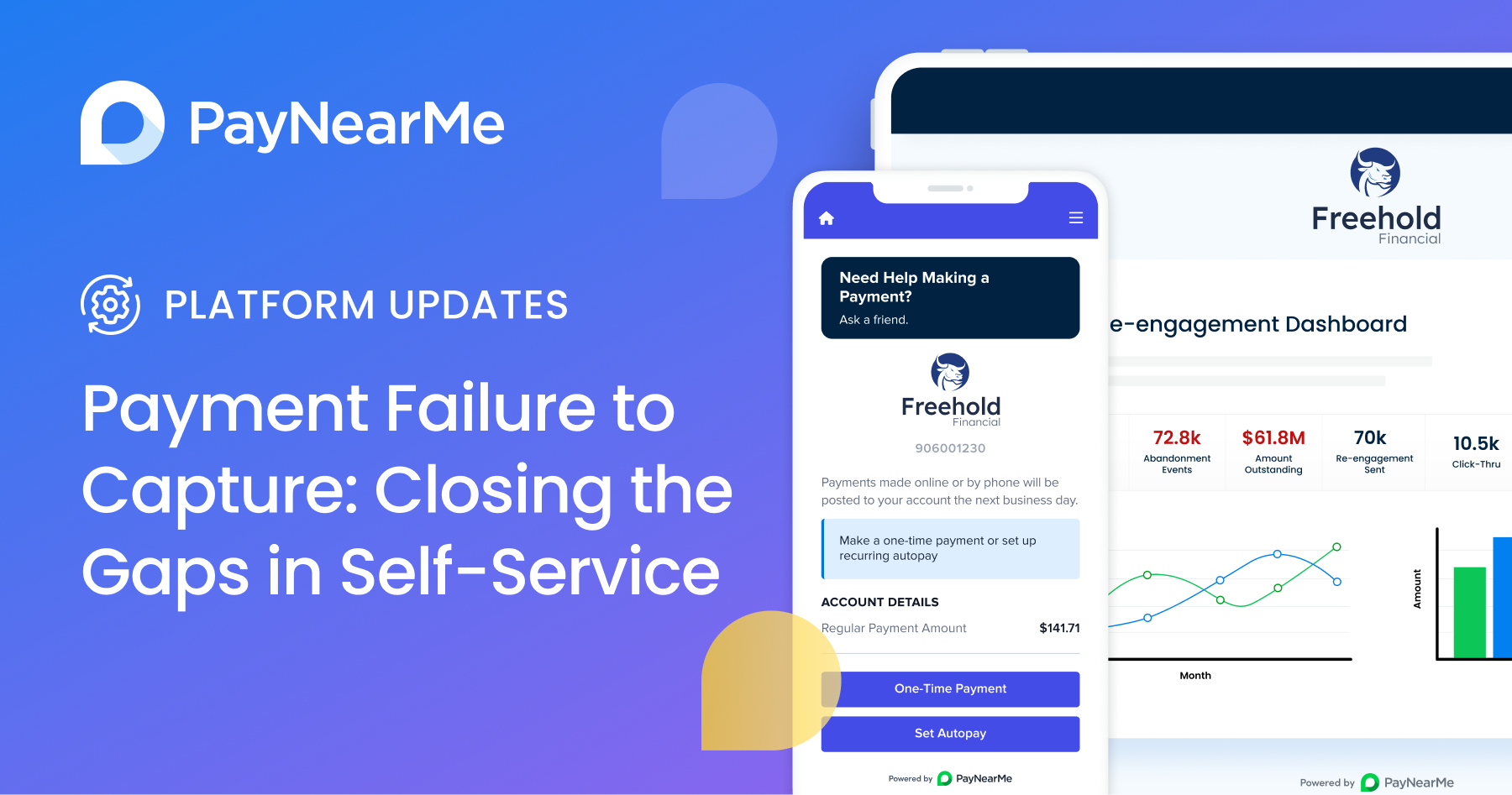
WithPayXM’s latest capabilities—Payer Re-Engagement, Dynamic Payment Options and Invite a Payer—businesses can see more completed payments, fewer support calls and a lower cost of acceptance.
Payer Re-Engagement: Recover payments before they become exceptions
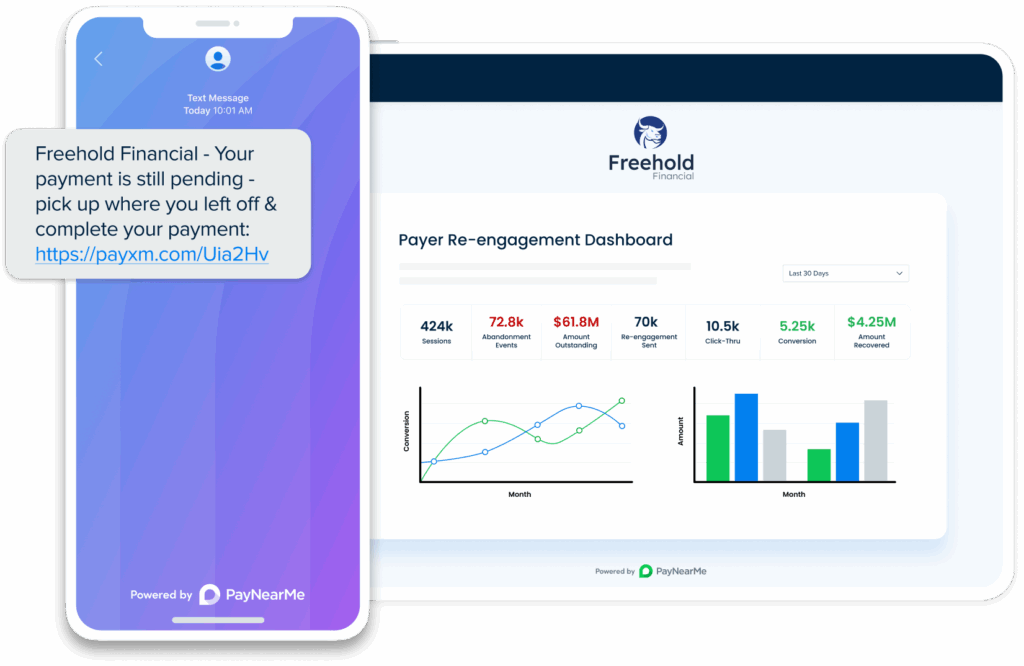
One of the most common breakdowns in the payment journey is abandonment. For example, payers may start a payment, get distracted and never come back.
It’s a small moment, but one that happens constantly. And when it does, most businesses lose visibility into what went wrong. The payment is forgotten, and the next step is often manual follow-up from collections or customer support.
That’s where costs begin to add up.
Payer Re-Engagement changes that dynamic. By automatically triggering timely, personalized outreach when a payment is abandoned, businesses can proactively bring payers back into the flow without manual intervention.
The impact is measurable:
- 50% of payers return after receiving a re-engagement message
- 7% of those complete a payment, outperforming the ~4% e-commerce benchmark
Instead of escalating to costly follow-up workflows, businesses can recover payments earlier—keeping them within the self-service channel and reducing operational overhead.
Dynamic Payment Options: Turn failures into completions
Payment failures are another major driver of support costs. When a payment method fails, the typical outcome is friction: confusion, retries or a call to customer service.
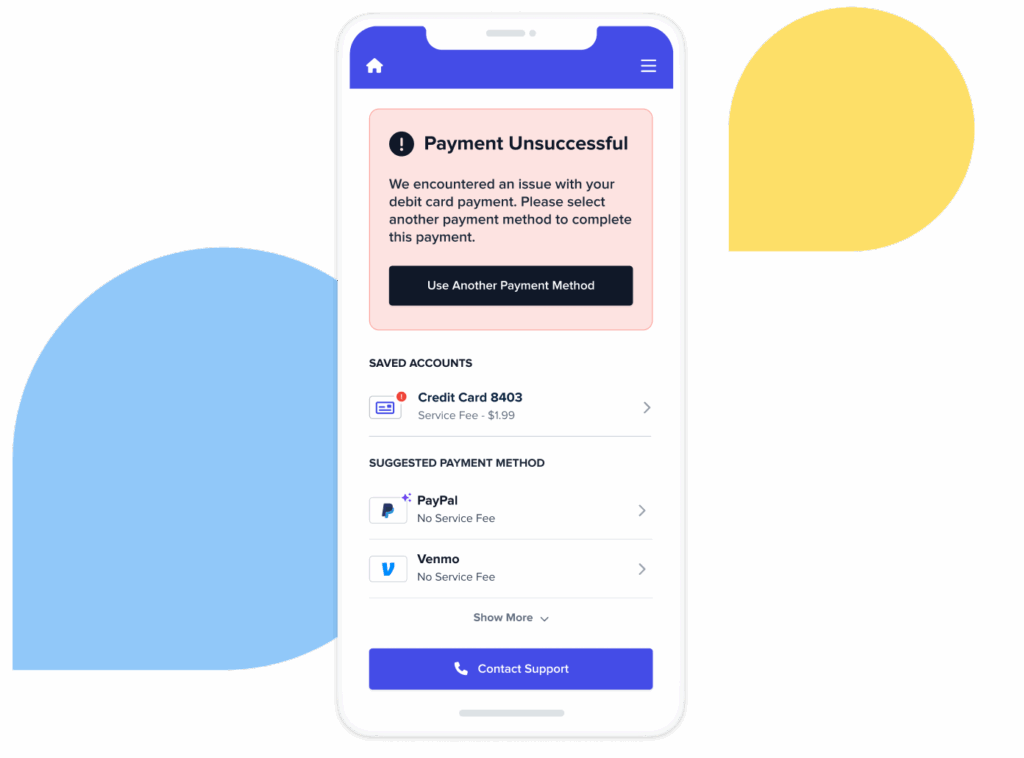
Dynamic Payment Options removes that friction in real time.
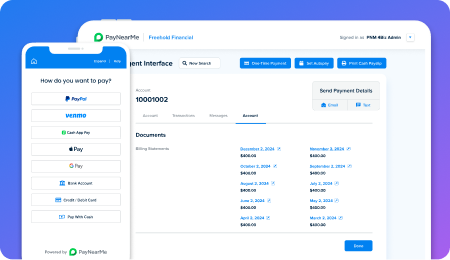
Rather than letting a failure end the journey, PayXM intelligently presents the next best payment method based on data and context so the payer can immediately attempt to pay again.
This means that the payer will automatically be presented options that are most likely to allow the payment to be processed based on a variety of factors like available payment methods, device type, etc. The organization can configure the platform to present options based on aggregate conversion patterns or to use specific options (like cash at retail or a debit card).
For businesses, this means:
- Fewer failed journeys escalating to support
- More payments recovered instantly
- Less reliance on agent-assisted resolution
When triggered, Dynamic Payment Options help recover an additional 9% of payments—without any manual involvement. It’s a simple shift with significant impact: instead of treating failures as exceptions, they become opportunities to complete the payment.
Invite a Payer: Bring external help into a controlled, trackable flow
In many industries, it’s common for someone else (a family member, friend or other third party) to step in and complete a payment. It may be a college student who needs some help with a car payment from their parents or a friend lending a hand with a payment on a personal loan.
The problem? Sending along a personal payment link is not the most secure way to invite someone to help with a payment. This behavior typically happens outside of controlled systems, creating gaps in visibility, compliance and tracking.
Invite a Payer brings that process into the self-service experience.
When a payer can’t complete a payment on their own, they can securely invite a trusted third party to step in without involving an agent.
For businesses, this unlocks several advantages:
- Maintains self-service even in assisted scenarios
- Provides full visibility into who completes the payment
- Reduces inbound support and manual coordination
- Keeps payments within a secure, trackable workflow
By formalizing an otherwise unmanaged behavior, businesses can increase completion rates while avoiding additional servicing costs.
Driving measurable impact across the payment lifecycle
These capabilities build on PayNearMe’s broader approach to Payment Experience Management—where every interaction is optimized for completion, efficiency and cost reduction.
Across our lending portfolio, the average client sees a 40% reduction in agent assisted payments in their first 12 months. Other results include:
- One finance company increased self-service usage from 37% to nearly 75%
- Another sees more than 55% of transactions completed via self-service
By keeping more payments in self-service and recovering those that would otherwise fail businesses can:
- Accelerate cash flow
- Reduce reliance on agent-assisted channels
- Lower the total cost of acceptance
From reactive support to intelligent payment experiences
The shift underway is clear.
Traditional payment operations rely on reacting to problems after they occur. Payment Experience Management flips that model—using automation and intelligence to prevent and resolve issues within the payment journey itself.
With capabilities such as Payer Re-Engagement, Dynamic Payment Options and Invite a Payer, businesses can move toward:
- Proactive recovery instead of manual follow-up
- Self-service resolution instead of agent intervention
- Higher completion rates without added cost
The result is a more efficient, scalable and cost-effective payment operation.
Learn more
To see how PayNearMe is helping businesses optimize every step of the payment journey, explore our approach to Payment Experience Management or learn more about boosting self-service adoption with PayXM.